Stinging insect removal in Columbus, OH requires clear identification of nesting biology to prevent accidental interior dispersal into bedrooms and living spaces. High-risk nests in German Village and Victorian Village…
Stinging insect removal in Columbus, OH requires clear identification of nesting biology to prevent accidental interior dispersal into bedrooms and living spaces. High-risk nests in German Village and Victorian Village frequently establish inside decorative wood cornices, porch soffits, and aging brick mortar joints, while properties in Clintonville, Upper Arlington, and Worthington often contend with subterranean yellowjacket nests beneath dense landscaping or bald-faced hornet globes high in mature deciduous canopies near Whetstone Park of Roses. An untreated wall-void colony poses distinct physical hazards: yellowjackets chew through gypsum wallboard within 10 to 14 days when their primary exterior flight exit is sealed improperly, driving thousands of aggressive foragers into finished rooms. Single-visit targeted interventions treat the active brood directly using specialized micro-injectors or non-repellent residual formulations before any structural opening is sealed.
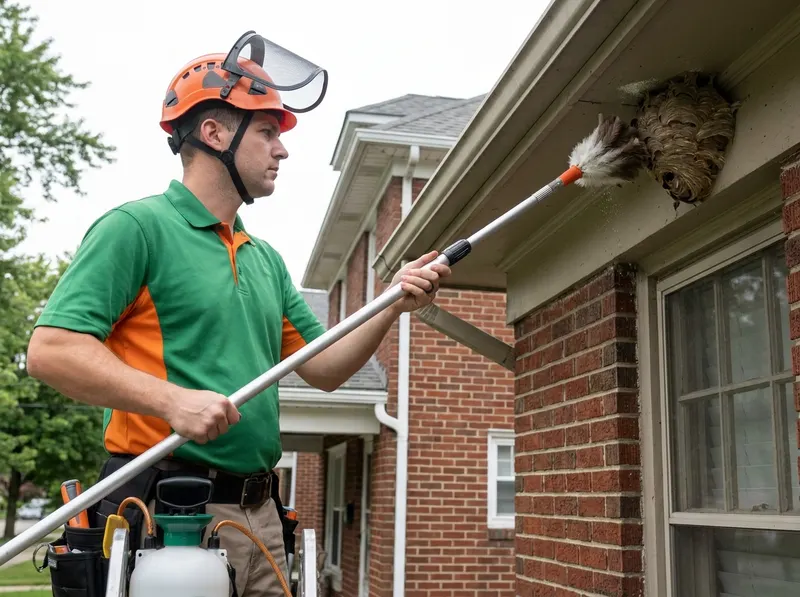
Decision guidance depends on the physical location of the comb and the specific nesting substrate. An exterior umbrella wasp nest under an open eave requires straightforward aerosol freeze knockdown and physical scraping, whereas an internal wall-void infestation behind historical wood siding in Bexley or Grandview Heights necessitates thermal imaging or acoustic detection to locate the exact brood center. If the nest is accessible externally without structural disassembly, a localized physical extraction is sufficient. If the insects have penetrated the building envelope into fiberglass batting or subflooring, the required intervention involves selective structural access, complete comb removal, void sanitation to prevent secondary infestations from carpet beetles, and permanent exclusion using galvanized steel mesh. Choosing a localized topical treatment when a colony occupies structural framing risks leaving behind pounds of honey or decomposing brood, which leads to ceiling staining and structural rot.
Technicians follow an objective three-step protocol to re-establish structural safety and protect household members from venom exposure. Step 1: Technicians survey the flight lines across the property boundary, identifying whether the species is an aggressive scavenger like the German yellowjacket or a native pollinator requiring non-lethal coordination. Step 2: The active entry portal is treated directly with pressurized dust or foaming knockdown agents designed to neutralize the queen and foraging workers without scattering the colony into wall cavities. Step 3: Technicians physically dismantle the paper nest envelope or extract the wax comb, scrape the anchor site, vacuum residual foragers with HEPA filtration equipment, and seal the exterior void with silicone-acrylic sealant and 1/4-inch hardware cloth. This problem-first triage resolves the acute safety risk immediately without requiring ongoing quarterly subscription commitments.
Every job gets a firm, written price after a free on-site visit.
Tell us about your stinging insect removal job in Columbus and we'll send a clear, written quote, usually the same day.
 Kelmar Pest Services