Residential pest management serves to halt contamination and physical property destruction before pests colonize internal wall voids. When field mice, carpenter ants, or brown-banded cockroaches compromise home living…
Residential pest management serves to halt contamination and physical property destruction before pests colonize internal wall voids. When field mice, carpenter ants, or brown-banded cockroaches compromise home living spaces, household hygiene degrades rapidly. In older Columbus architectural properties, such as brick duplexes in German Village or wood-framed Victorian Village properties built prior to 1920, pest activity frequently stems from historical settling, porous stone mortar basements, and aged framing gaps near sandstone sill plates. Modern homes in Upper Arlington and Bexley more commonly experience pest traffic around expansive rooflines, unsealed soffit junctions, and HVAC chases. Resolving these challenges requires precise identification of species behavior; broadcast surface spraying fails when biological colonies nest within subflooring or crawlspaces.
Selecting a localized single-visit diagnostic and remediation visit offers clear structural trade-offs compared to high-pressure quarterly subscription contracts. A problem-first remediation plan prioritizes mechanical exclusion, identifying foundation cracks, plumbing pipe gaps, and damaged door sweeps, to halt re-entry without trapping property owners in recurring financial agreements. While an auto-renewing calendar contract sprays predictable chemical perimeters every ninety days regardless of current pest pressure, targeted remediation stops the exact reproductive cycle present inside the structure. For heavy German cockroach infestations in Franklinton or dense roof-void rodent nesting near mature oak trees in Clintonville and Worthington, immediate source-point baiting and void injections yield verifiable biological control where surface repellents simply scatter colonies deeper into drywall.
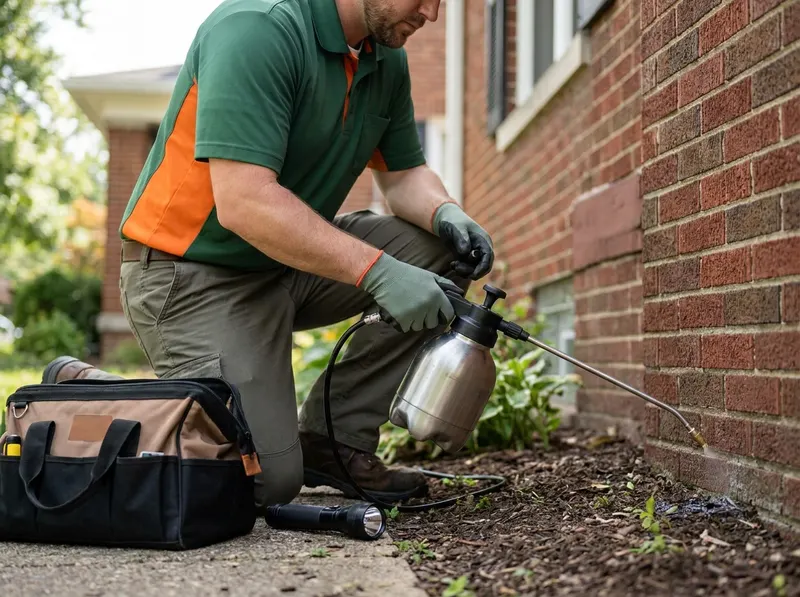
Treatment execution follows four distinct steps to protect home occupants and food prep surfaces: 1. Complete perimeter and attic structural inspection to map active nesting, moisture leaks, and thermal entry zones. 2. Targeted interior placement of non-volatile baits, micro-encapsulated formulations, or mechanical capture stations directly inside voids, excluding open living areas. 3. Exterior foundation barrier treatment applied up to 3 feet up the exterior masonry and 3 feet out onto soil margins. 4. Detailed mechanical remediation mapping that provides property owners with exact physical repair notes for unsealed flashing, pipe penetrations, and damaged garage door seals.
Every job gets a firm, written price after a free on-site visit.
Tell us about your residential pest control job in Columbus and we'll send a clear, written quote, usually the same day.
 Kelmar Pest Services