Securing a reliable pest control service in Columbus requires direct identification of wood-destroying organisms, indoor insect colonies, and seasonal wildlife vectors. Properties facing active biological contamination, chewed electrical wiring, or nocturnal scratching sounds inside wall voids receive systematic diagnostic assessments across all local central Ohio zip codes.
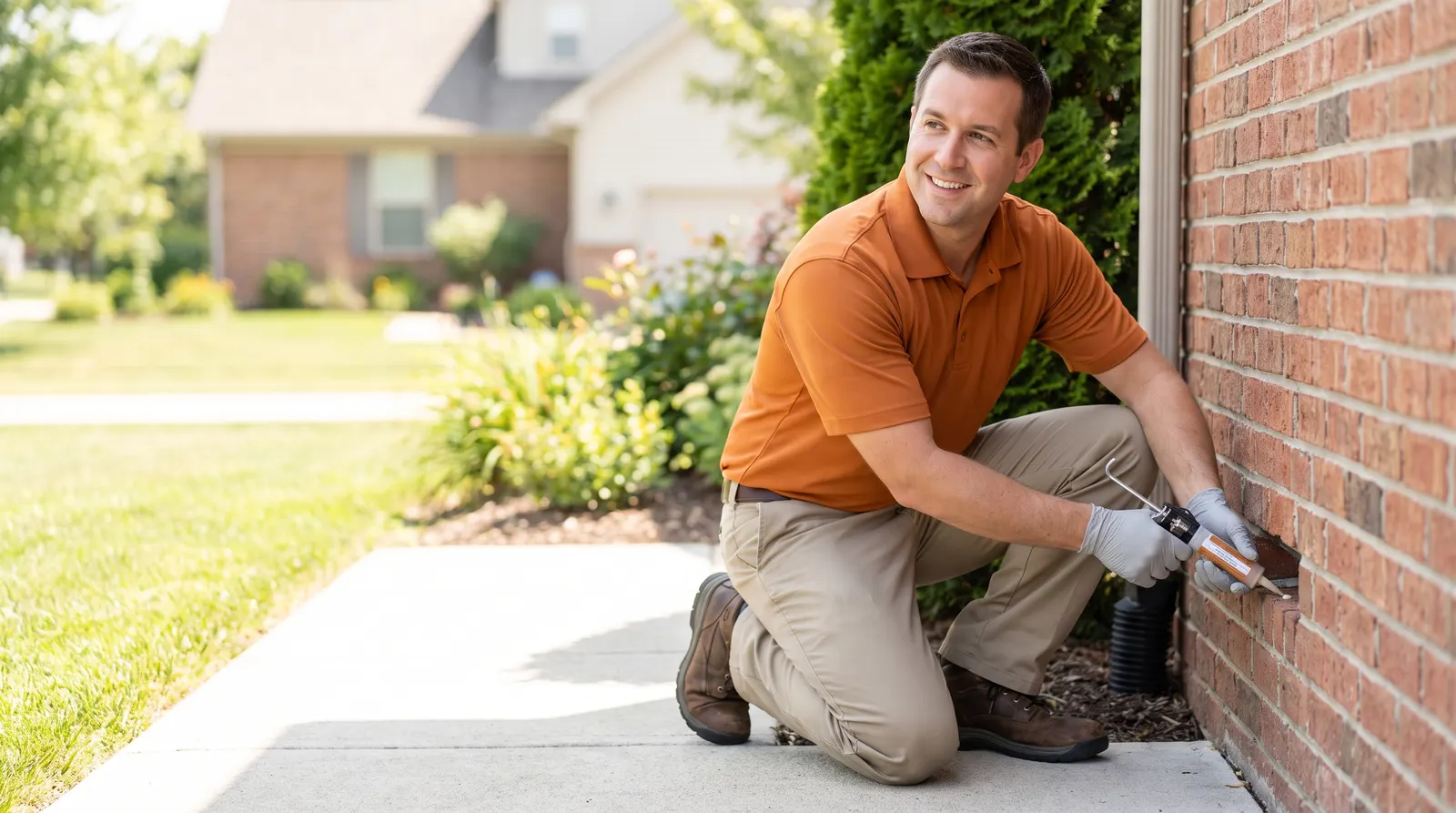
Pest Control Service in Columbus is a specialized structural inspection and biological remediation service that identifies insect vectors, eliminates active infestations, and seals perimeter ingress points across residential and commercial buildings throughout Franklin County.
Every service reflects the same meticulous attention to detail, whether it's a single job or a larger pest control service project across Columbus.
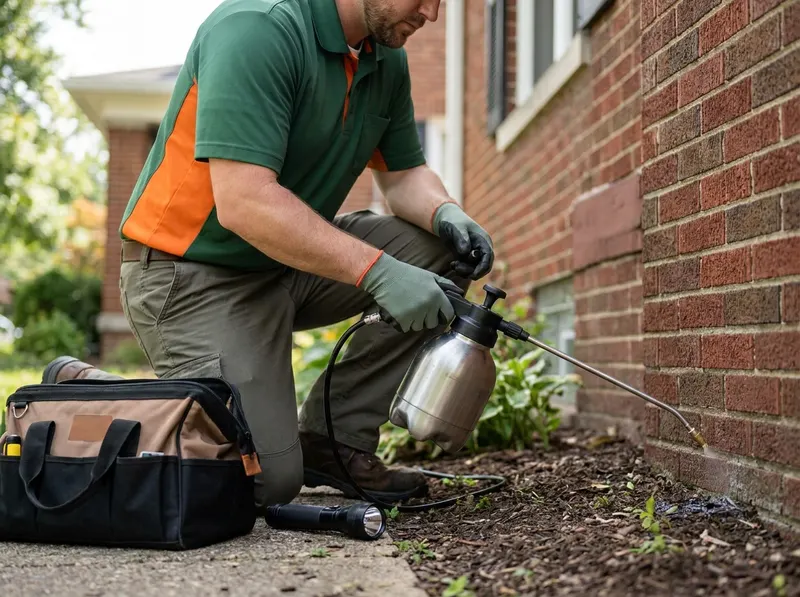
Residential pest control systematically addresses acute infestations within single-family homes, historical brick townhomes, and suburban duplex properties. Technicians conduct an exhaustive interior and exterior audit, examining pipe chases, subfloors, finished living spaces, and attic trusses to eliminate carpenter ants, wolf spiders, centipedes, and pantry beetles. Perimeter treatments deposit microencapsulated protective barriers along foundational sills and window thresholds to prevent exterior re-entry. Interior applications focus exclusively on targeted harborages using low-volatility formulations that keep family living spaces sanitary, calm, and physically protected without airborne residues.
Get a quote →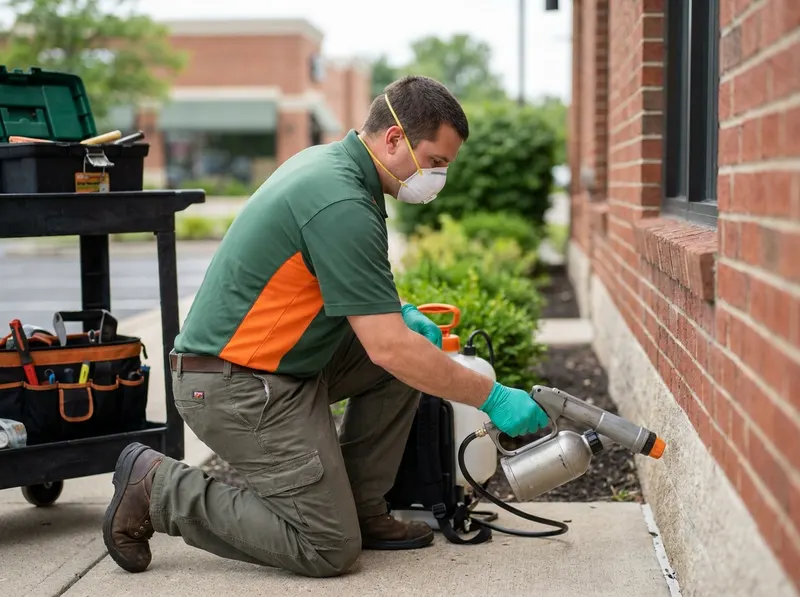
Commercial pest control provides scheduled biosafety auditing, regulatory health documentation, and proactive biological mitigation for restaurants, medical clinics, warehousing facilities, and corporate office centers throughout the Columbus metropolitan area. Protocols center on Integrated Pest Management (IPM) methodologies, incorporating tamper-proof exterior bait stations, interior insect light traps, and precise barcoded monitoring logs that satisfy local health department inspections. Technicians address non-chemical sanitation deficiencies, grease accumulation zones, and loading dock door gaps, deploying non-toxic monitoring matrices and targeted insect growth regulators that safeguard inventory, commercial reputations, and working staff.
Get a quote →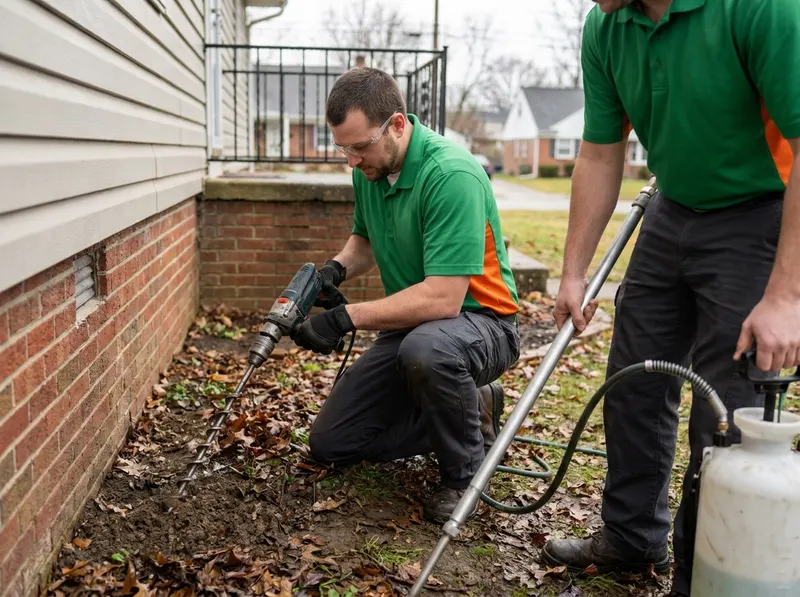
Subterranean termite treatments systematically neutralize eastern subterranean termite (Reticulitermes flavipes) colonies before structural floor joists, rim joists, and stud walls suffer catastrophic cellulose degradation. Remediation teams excavate continuous liquid perimeter trenches along exterior foundation perimeters and use rotary hammer drills to inject non-repellent liquid termiticides through interior concrete slabs, basement floors, and attached garage aprons. Structural timber surfaces displaying active mud tubing receive localized borate infusions that penetrate deep into the grain, rendering structural members permanently toxic to feeding workers and halting hidden structural destruction.
Get a quote →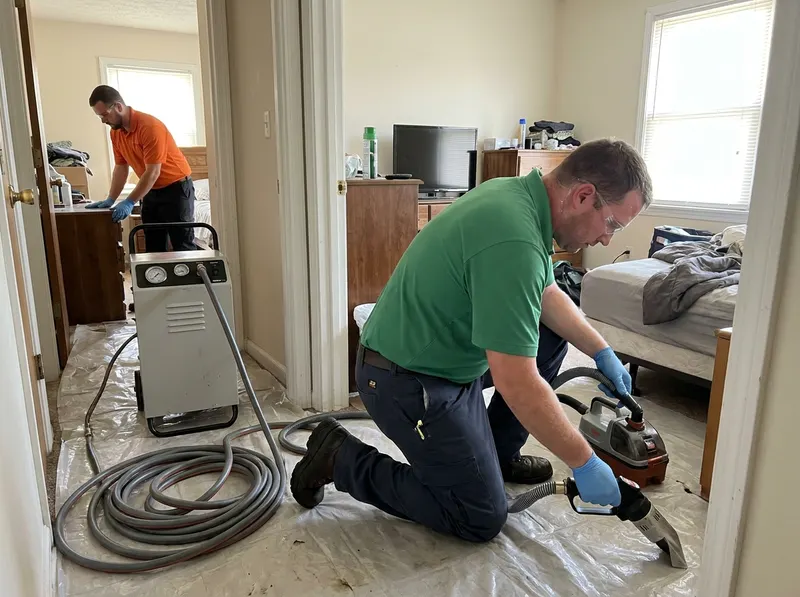
Bed bug eradication protocols deploy intensive thermal convection remediation combined with pharmaceutical-grade residual dust formulations to eradicate resistant Cimex lectularius populations. Industrial high-output heating units elevate enclosed room temperatures to lethal thresholds between 122 and 135 degrees Fahrenheit, sustaining this level for several hours to penetrate deep mattress seams, box spring coils, electrical switch plates, and baseboard crevices. Follow-up treatments apply amorphous silica gel desiccants inside wall voids to eliminate migrating stragglers, providing immediate relief from night bites and ending the intense anxiety associated with persistent bedroom infestations.
Get a quote →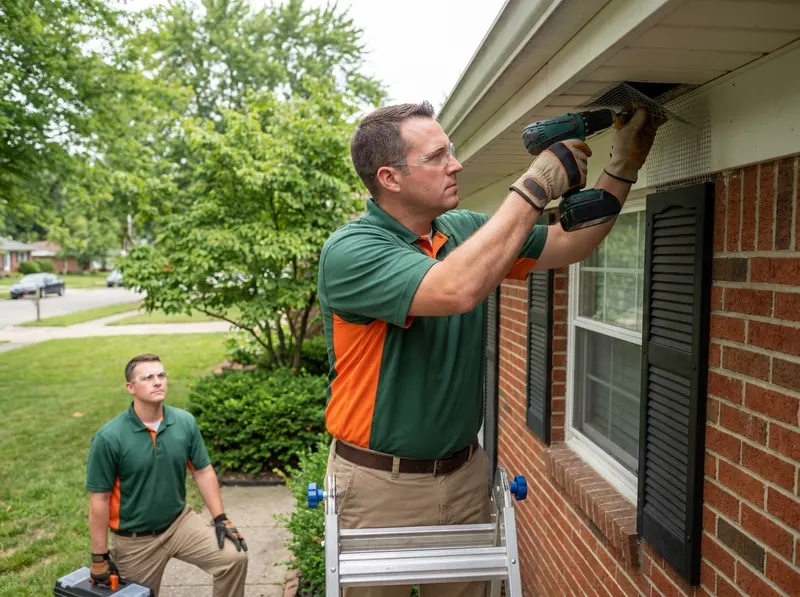
Nuisance animal management and structural exclusion humanely evicts raccoons, eastern grey squirrels, bats, and opossums nesting inside attic insulation, chimney flues, and roof soffits. Technicians install heavy-duty spring-loaded one-way exit doors over primary entry portals, allowing resident animals to depart safely to forage while preventing re-entry into the building envelope. Once monitoring confirms total animal departure, technicians mechanically secure roofline drip edges, ridge vents, and architectural louvers using 16-gauge galvanized steel mesh, followed by biological waste removal, enzyme sanitization, and spot insulation repairs.
Get a quote →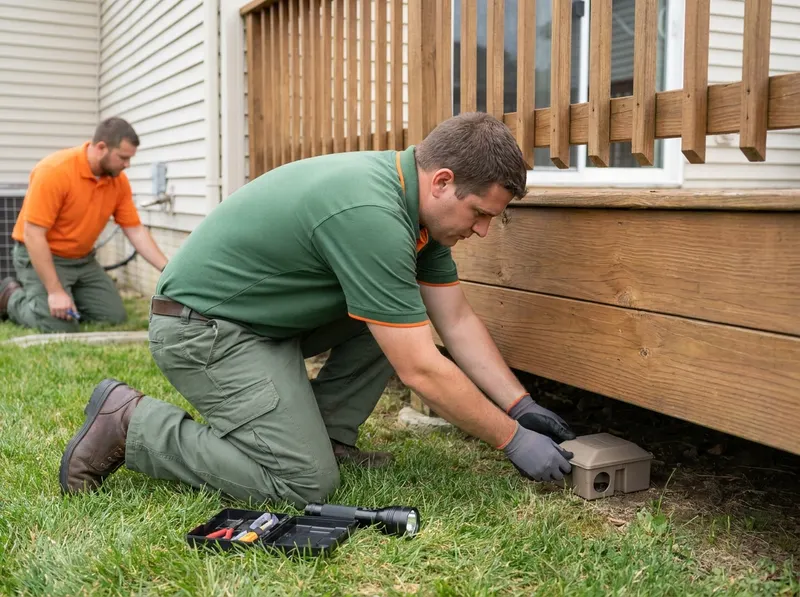
Rodent abatement stops Norway rats (Rattus norvegicus) and house mice (Mus musculus) from chewing electrical wiring insulation, contaminating kitchen pantries, and spreading biological pathogens through urine and fecal trails. Technicians map primary structural trails using high-intensity ultraviolet tracking lamps, deploying locked, tamper-resistant mechanical snap traps inside crawlspaces and dropped ceilings. Exterior perimeters receive architectural exclusion work where field technicians pack weeping holes, crawlspace vents, and foundation gaps with chew-proof copper mesh, expandable stainless steel wire, and premium elastomeric structural sealants.
Get a quote →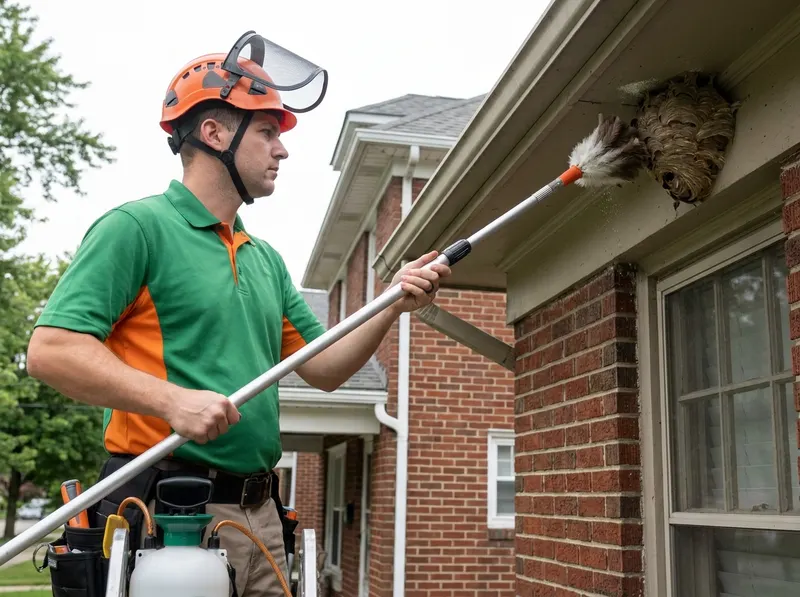
Stinging insect remediation safely eliminates aggressive nesting colonies of aerial yellowjackets, bald-faced hornets, European hornets, paper wasps, and ground-burrowing cicada killers. Specialized technicians utilize pressurized aerosol knockdowns and microencapsulated residual pyrethroid dusts injected directly into subterranean voids, exterior soffits, wall cavities, or high tree branches. After complete colony neutralization is confirmed, technicians physically scrape and detach nests to prevent secondary scavenging by carpet beetles, restoring safe exterior access to family yards, patios, and home entryways.
Get a quote →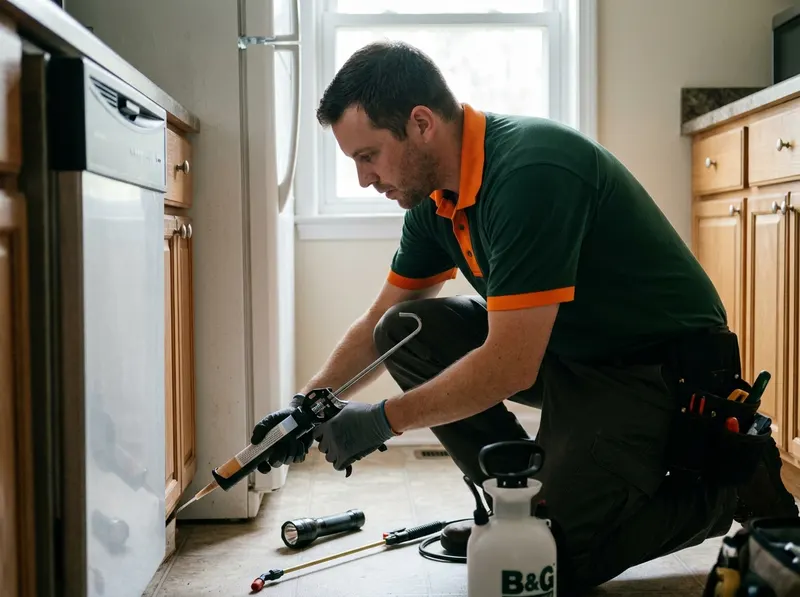
Targeted cockroach cleanouts address stubborn German, American, and Oriental cockroach infestations within residential kitchens, commercial prep areas, and damp basement utility pits. The elimination process combines HEPA vacuum extraction of live aggregation clusters with the placement of advanced insect growth regulator (IGR) bait matrices inside secluded electrical motor housings, cabinet hinge pockets, and plumbing access panels. This comprehensive approach breaks the reproductive egg cycle, prevents nymph development into breeding adults, and eliminates allergen-rich fecal frass without wide-scale broadcast chemical spraying.
Get a quote →You get a firm, itemized quote for your pest control service before any work begins, no surprises, no pressure.
Careful prep, tidy work, and a full cleanup when we are done. We treat your home and belongings like our own.
The same trusted, background-checked team from the first call to the final check.
Selecting appropriate structural treatment depends directly on the biological target, the severity of property compromise, the architectural age of the structure, and the presence of shared party walls. If you detect localized nocturnal scratching behind baseboards or spot scattered cylindrical droppings along perimeter crawlspace edges, choose targeted mechanical trapping combined with 1/4-inch galvanized hardware cloth exterior exclusion. If you observe live subterranean termite alates shedding wings near basement windows or notice branching mud tubes running along porous block foundations, select a comprehensive non-repellent liquid termiticide perimeter trenching program.
Choosing chemical spot treatments over physical exclusion saves immediate upfront labor costs, but leaving structural utility gaps open guarantees recurring winter rodent reinvasions once autumn frost hits Franklin County; conversely, implementing whole-home architectural exclusion alongside targeted residual applications demands a higher initial financial commitment but permanently halts biological access pathways into insulated living spaces. If dealing with bed bug infestations across multiple sleeping quarters, whole-structure thermal remediation heated to 122 degrees Fahrenheit delivers an immediate single-day kill of all developmental stages including eggs, whereas targeted chemical spot treatments require 2 to 3 successive treatment rounds spaced 14 days apart to address newly hatched nymphs. For multi-unit residential apartment housing or commercial food prep operations, integrated pest management protocols prioritize non-chemical sanitation interventions, door sweep updates, and insect growth regulators over recurring single-event aerosolized sprays, preventing pesticide resistance while maintaining strict public health biosafety compliance.
Every project gets a firm, written price after a free on-site visit. Ranges below for orientation.
Tell us about your pest control service job and we'll send a clear, written quote, usually the same day. Or just call and talk to a real Columbus pro.
(380) 267-1530
Properties throughout Franklin County contend with intense micro-local biological pressures rooted in the geographic convergence of the Scioto and Olentangy rivers alongside historic central Ohio building techniques. In riverfront sectors including Franklinton, the Scioto Mile Promenade, and the Brewery District, heavy Norway rat populations thrive in municipal sewer corridors and subterranean river embankments, exploiting high spring water tables that force rodents upward through foundational stone voids and plumbing trenches. Farther north in Victorian Village, German Village, and Clintonville, older structural housing stock frequently relies on unreinforced hand-laid brick, dry-stacked limestone, or porous rubble stone foundations. These century-old foundational walls routinely exhibit lime mortar decay, creating subterranean pathways directly into damp crawlspaces where eastern subterranean termites establish hidden mud tubes against soft white pine floor sills. In tree-lined enclaves like Upper Arlington, Bexley, Grandview Heights, and the mature streets surrounding the Whetstone Park of Roses in Clintonville, massive oak, silver maple, and river birch canopies form direct aerial pathways to historical cedar shake and asphalt rooflines. Eastern grey squirrels and raccoons routinely tear through aging fascia boards and uncapped gable vents, infesting attic blown-in insulation during cold autumn snaps. Additionally, seasonal temperature swings in central Ohio, from humid 90-degree summer afternoons to sub-zero winter blasts, drive rapid biological migrations, triggering mass odorous house ant invasions in June and intense rodent indoor consolidation throughout November and December across the greater Columbus area.
Free estimates for Columbus & the surrounding area.
 Kelmar Pest Services