Flea and tick yard and home treatment resolves persistent blood-feeding parasite infestations by addressing the outdoor reservoir and the indoor nesting zones concurrently. When domestic pets or local wildlife…
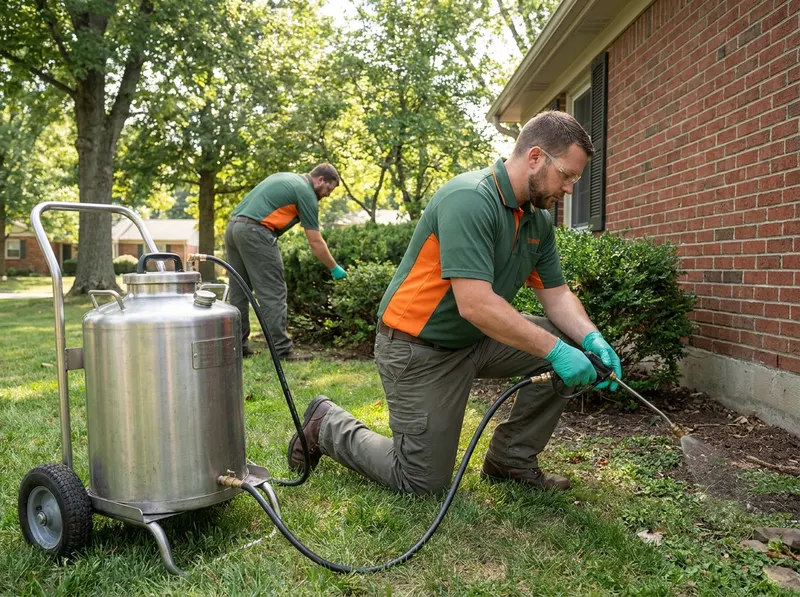
Flea and tick yard and home treatment resolves persistent blood-feeding parasite infestations by addressing the outdoor reservoir and the indoor nesting zones concurrently. When domestic pets or local wildlife introduce fleas or ticks into a residence, adult insects represent only 5% of the total population; the remaining 95% exist as hidden eggs, larvae, and pupae within floorboard gaps, carpet fibers, and shaded outdoor mulch beds. A yard-only treatment leaves indoor eggs to hatch into carpet-dwelling adults, while an interior-only application allows animals to continually track outdoor ticks indoors. Effective remediation pairs an adulticide knockdown agent with an insect growth regulator (IGR) such as pyriproxyfen, which prevents juvenile larvae from molting into biting adults. The trade-off between standalone spray applications and dual-zone treatment is total eradication versus recurring seasonal flare-ups: addressing both microclimates halts continuous re-infestation.
Outdoor tick habitats in Franklin County concentrate heavily along shaded perimeter fence lines, tall turfgrass, and ornamental shrubs. Properties flanking the ravines of Clintonville and Worthington, as well as tree-dense parcels in Bexley and Upper Arlington, face heavy deer tick pressure driven by urban wildlife transit. Shaded brick courtyards and compact turf patches in German Village and Victorian Village often harbor flea larvae shielded from direct sunlight. Outdoor applications use microencapsulated pyrethroids focused on the transition zone between manicured lawn and untamed brush, covering up to a 30-foot protective perimeter along fences and building foundations. Indoors, applicators target sub-surface carpet piles, furniture skirting, and the baseboard perimeters of sleeping quarters to neutralize pests where domestic pets rest.
Executing treatment requires specific preparatory steps to ensure chemical efficacy and resident safety. Step 1: Occupants thoroughly vacuum all carpets, rugs, and upholstered furniture, immediately sealing and discarding the vacuum bag in an outdoor waste bin to remove loose pupae and stimulate remaining eggs to hatch. Step 2: Clear all flooring across living spaces, wash pet bedding in water exceeding 130 degrees Fahrenheit, and temporarily relocate pets. Step 3: Technicians apply targeted residual applications and IGR formulas across interior target sites and exterior foliage. Step 4: The property remains vacant for a mandatory 2 to 4 hours until all treated surfaces dry completely, neutralizing inhalation risks for children and pets. Step 5: Routine vacuuming continues every 48 hours for 14 consecutive days to extract newly emerged adults as residual formulations degrade pupal clusters.
Every job gets a firm, written price after a free on-site visit.
Tell us about your flea & tick yard & home treatment job in Columbus and we'll send a clear, written quote, usually the same day.
 Kelmar Pest Services