Surface aerosol sprays purchased in retail aisles disperse ants rather than eliminating them, prompting secondary queens to split through budding and create multiple satellite nests behind drywall. Professional ant…
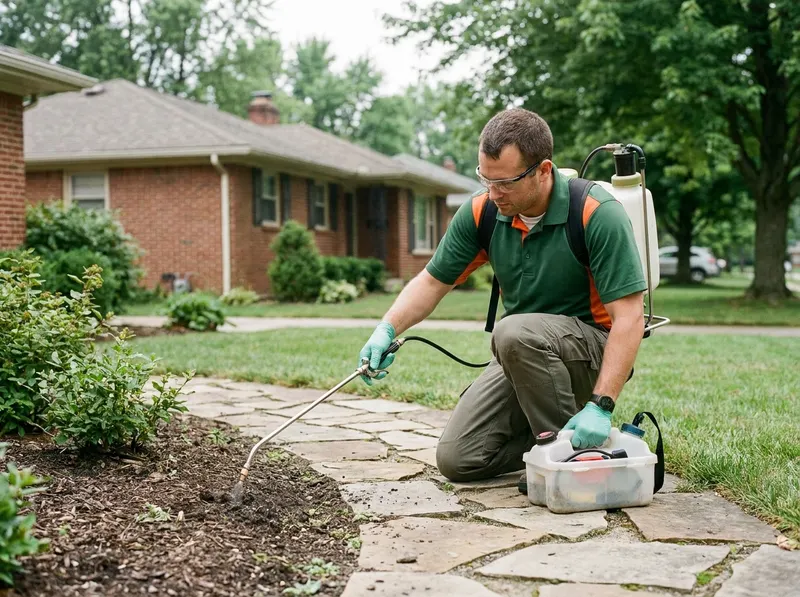
Surface aerosol sprays purchased in retail aisles disperse ants rather than eliminating them, prompting secondary queens to split through budding and create multiple satellite nests behind drywall. Professional ant colony mitigation utilizes non-repellent transfer chemistry, allowing worker ants to carry active bait matrixes deep into primary nests before biological detection occurs. In historic structural framing found throughout German Village, Victorian Village, and the Short North Arts District, 100-year-old pine subflooring and perimeter sandstone foundations frequently harbor carpenter ant satellite nests where plumbing lines create elevated wood-moisture levels. For standard slab foundations common in Franklinton and the Hilltop, pavement ants routinely breach interior perimeters via expansion joints, flooring baseplates, and heating duct margins.
Technicians treat perimeter soil and exterior foundation stone up to 36 inches above grade and 24 inches outward across the soil line using micro-encapsulated liquid barriers. If structural timber exhibits moisture damage near downspouts or shaded tree canopies, conditions common in mature wooded areas like Clintonville, Bexley, Upper Arlington, and Worthington, field assessments track parent colonies nesting in decaying heartwood or moist exterior landscaping mulch. Interior treatments prioritize granular carbohydrate or protein baits placed inside crawlspaces, plumbing chases, and wall voids near kitchen pantries to clear foraging columns without broadcasting airborne residues on food preparation counters.
Selecting standalone target mitigation resolves acute infestations without requiring mandatory ongoing subscription contracts, providing direct elimination for independent homeowners and property managers. If outdoor foraging columns measure under 50 individual pavement ants along sidewalk borders, mechanical exterior caulking and moisture management may suffice; if interior foraging trails appear along baseboards, countertops, or window mullions, colony-level bait transversion is necessary to eradicate reproductive queens. The trade-off between exterior broadcast barriers and localized wall-void injection centers on dwell time: non-repellent transfer agents require 7 to 14 days to fully extinguish multi-queen colonies, ensuring complete eradication rather than temporary cosmetic knockdown.
Every job gets a firm, written price after a free on-site visit.
Tell us about your ant colony mitigation job in Columbus and we'll send a clear, written quote, usually the same day.
 Kelmar Pest Services