Protective tick yard treatments operate on an Integrated Pest Management protocol designed to establish defensive cordons around outdoor living zones. Central Ohio properties near waterways such as the Olentangy River…
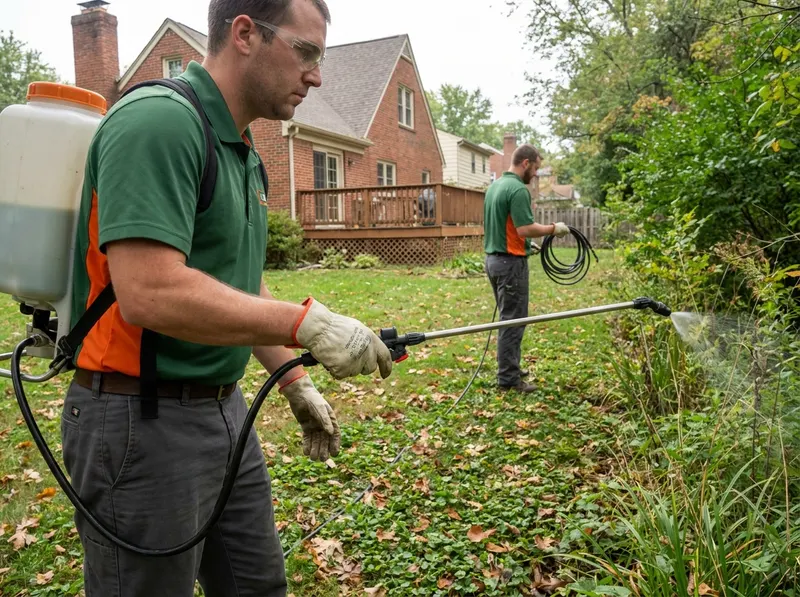
Protective tick yard treatments operate on an Integrated Pest Management protocol designed to establish defensive cordons around outdoor living zones. Central Ohio properties near waterways such as the Olentangy River and dense residential parks encounter consistent tick migration via white-tailed deer, raccoons, and small rodents. Properties bordering wooded edges in Clintonville or mature tree canopies in Upper Arlington, Bexley, and Grandview Heights face heightened exposure during peak nymph activity between April and July, as well as adult activity in the autumn months. Applications apply micro-encapsulated synthetic pyrethroids or EPA-exempt botanical solutions directly to shaded perimeters, underbrush, leaf litter accumulations, and tall turf interfaces up to a height of 3 feet.
A yard treatment serves properties with heavy canopy cover, direct woodline borders, or designated pet transit zones, whereas structural perimeter pest barriers focus strictly on building foundations. The fundamental trade-off lies between localized application volume and property foliage density: deep leaf layers require high-pressure ground penetration rather than standard surface misting to reach questing ticks sheltering in soil duff. Historic urban lots in German Village, Victorian Village, and Olde Towne East with enclosed courtyard plantings require careful manual backpack applications around shade-tolerant perennials to maintain pollinator safety, while expansive open grounds in the University District and Franklinton benefit from mechanized broad-perimeter spreaders.
Execution follows an objective three-step methodology. 1. Technicians measure perimeter linear footage and map vegetative transition zones where yard turf meets shade cover. 2. A calibrated low-pressure hydraulic sprayer applies targeted residual barrier treatments to groundcover and lower branch lines, excluding edible vegetable plots and flowering pollinator plantings. 3. Granular moisture-resistant barrier agents are laid along property stone walls, wood storage piles, and exterior fence lines to prevent questing tick movement into recreational turf. Liquid applications require approximately 60 to 90 minutes of drying time, after which children and household pets may re-enter the lawn space safely without risk of chemical transfer.
Every job gets a firm, written price after a free on-site visit.
Tell us about your protective tick yard treatments job in Columbus and we'll send a clear, written quote, usually the same day.
 Kelmar Pest Services