Residential pest migrations in Central Ohio follow distinct environmental shifts, from spring subterranean termite swarming along the Olentangy River corridor to autumn rodent displacements throughout tree-lined…
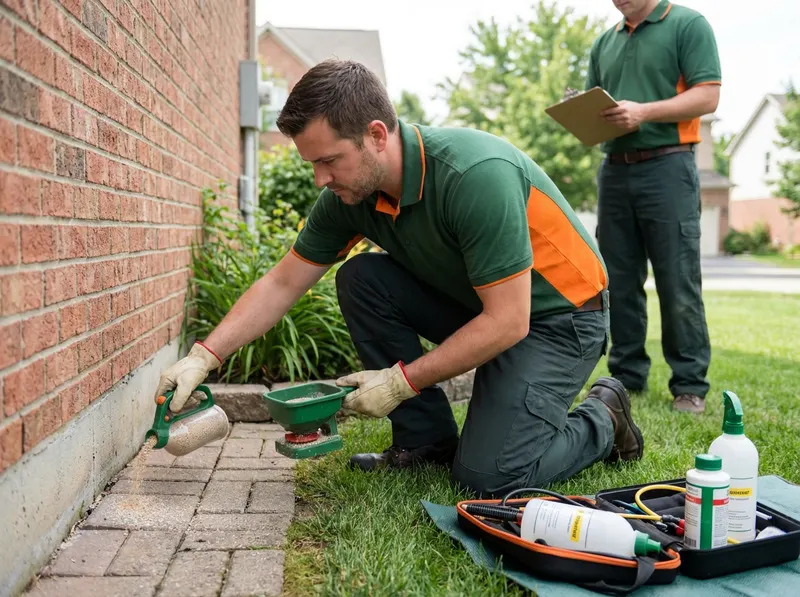
Residential pest migrations in Central Ohio follow distinct environmental shifts, from spring subterranean termite swarming along the Olentangy River corridor to autumn rodent displacements throughout tree-lined alleys. Low-toxicity Integrated Pest Management (IPM) treats the structural mechanics that permit pests inside living spaces rather than coating baseboards with broad-spectrum synthetic sprays. In historic double-brick properties throughout German Village, Victorian Village, and Olde Towne East, mortar degradation and stone foundation settlement create entry portals measuring just one-quarter inch, which allow field mice and American cockroaches into warm subfloors. Instead of saturating kitchens and pet zones with airborne toxins, the protocol applies silicone-copper mesh caulking to ledger boards, replaces dry-rotted sub-sill trim, and employs targeted micro-encapsulated baits directly into hidden void spaces where insects nest.
For newer single-family constructions and slab-on-grade additions in Upper Arlington, Bexley, and Grandview Heights, moisture management dictates insect presence. Overhanging silver maple canopies in Clintonville drop biological debris that retains dampness against masonry foundations, inviting odorous house ants and silverfish beneath siding. Low-toxicity management prioritizes perimeter grading adjustments, weep-hole screen installation, and targeted application of natural diatomaceous earth or borate formulations inside unfinished utility penetrations. This forensic approach resolves the structural conditions driving the infestation, protecting indoor air quality for young children and companion animals while establishing verifiable pest defense.
Decision guidance relies on structural infestation severity and timeline. When a property experiences localized activity, such as pantry beetles or satellite ant trails, targeted IPM exclusion solves the problem cleanly without chemical evacuation or persistent chemical odors. Conversely, severe multi-unit structural infestations, frequently discovered during student tenant turnovers in the University District or dense commercial spaces in the Short North Arts District and Franklinton, require multi-stage cultural modifications, continuous mechanical trapping grids, and structural repairs spanning three to six weeks. The trade-off is mechanical effort: IPM demands physical sealing and moisture reduction rather than an instant, short-lived chemical drenching, ensuring pests are permanently barred from returning through the envelope.
Every job gets a firm, written price after a free on-site visit.
Tell us about your low-toxicity integrated pest management job in Columbus and we'll send a clear, written quote, usually the same day.
 Kelmar Pest Services